Jane Magnolia

Landscape & Garden Uses

‘Jane’ magnolia is a hybrid deciduous shrub or small tree with a compact habit in the magnolia family (Magnoliaceae). It is part of the Little Girl series created at the National Arboretum in the 1950s by Francis DeVos and William Kosar, who selected this cultivar from the progeny of M. liliiflora ‘Reflorescens’ crossed with M. stellata ‘Waterlily’.

LIGHT: Full sun or partial shade
WATER: Good drainage, evenly moist
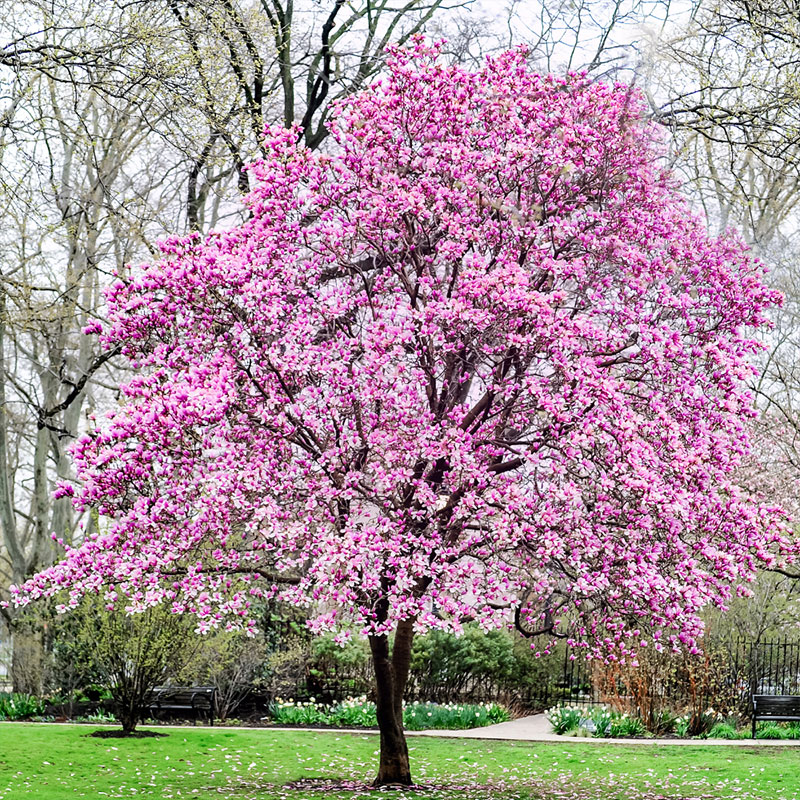
SIZE: 10-15 ft. height, 8-12 ft. width
Growing Preferences

Plant in moist, rich, well-drained soils in the full sun to partial shade in rich neutral to acidic, well-drained but evenly moist soils. Regular mulching of the root zone will help keep the soil moist. ‘Jane’ is tolerant of heavy clay soils, air pollution and heat. Prune sparingly, only to remove dead or broken branches, or if needed to maintain shape, do so after flowering. This magnolia has roots that are fleshy and easily damaged, so it is best not to move this plant once it is established. Choose the landscape location wisely.


  • Characteristics
  • Characteristics
  • Gallery
  • Gallery
  • Gallery
  • Gallery
  • Gallery
  • Gallery

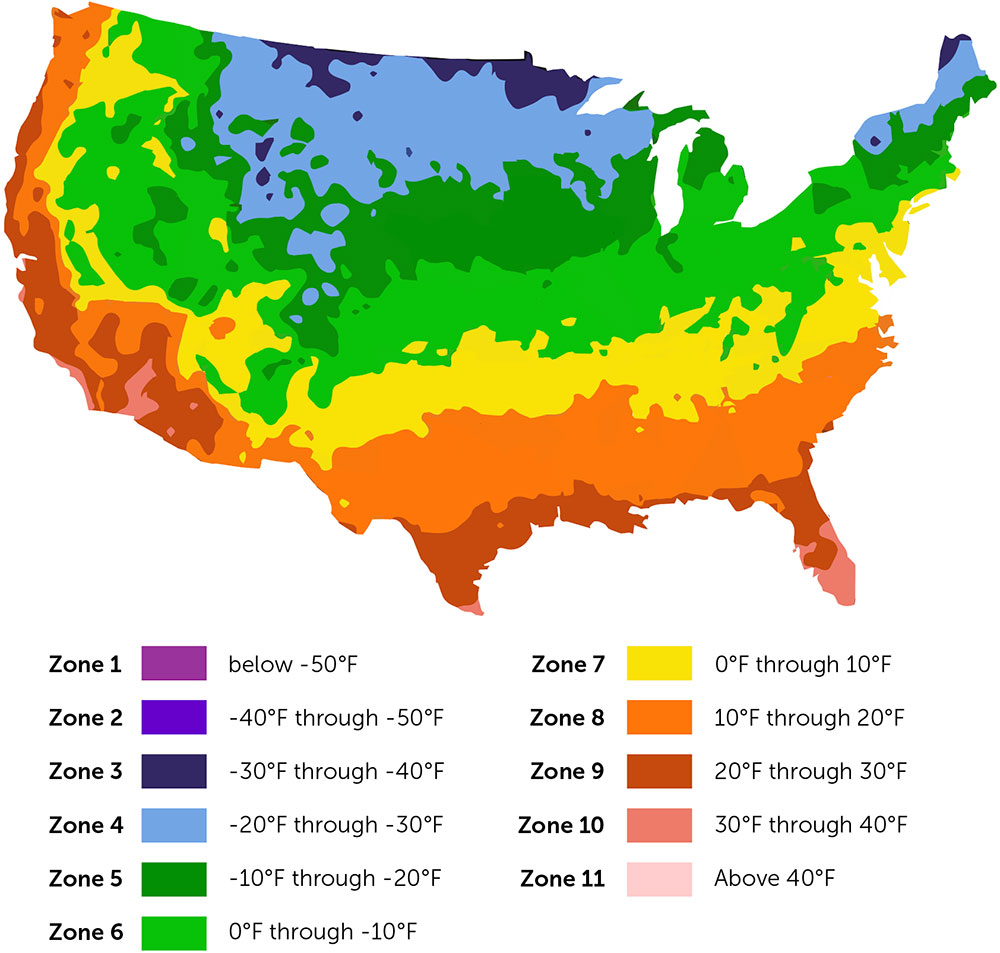
Zone: 4-8

Mature Height: 10-15 ft. tall

Mature Spread: 8-12 ft. wide

Landscape Characteristics

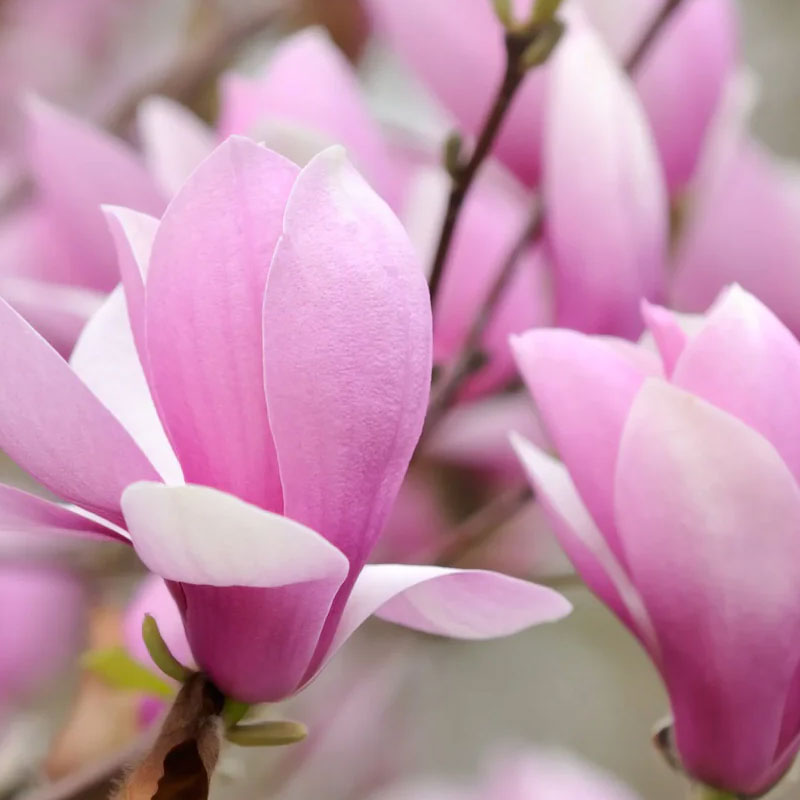
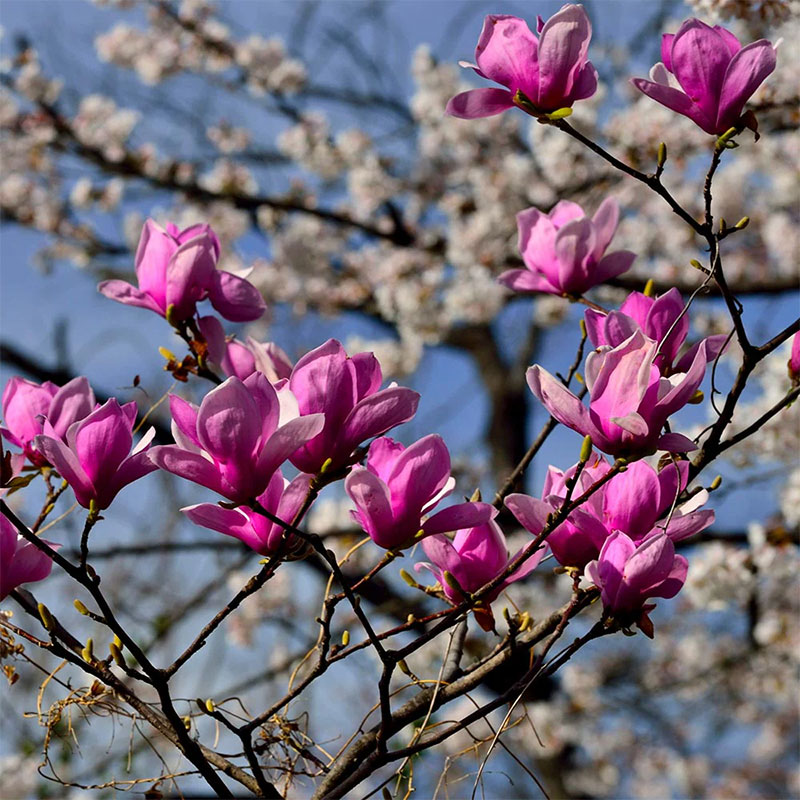
  • The Little Girl Series flowers from mid-April to early May, which is about two to four weeks later than its parent species and therefore less likely to be damaged by frost. ‘Jane’ is a particularly cold-hardy form with large fragrant purple-red flowers that resemble tulips with white centers covering bare branches before the leaves emerge. The flowers occasionally rebloom mid-summer. It grows to a height of around 15 feet tall and 12 feet wide.

Classification by Use

  • Plant as a specimen in a lawn, grow as an informal privacy hedge, along a foundation, use in the middle to back of a shrub border or at a woodland edge. This compact flowering tree makes a great addition to any courtyard, patio, or small space in the garden.

Foliage Shade

  • 6″ long ovate leaves emerge coppery and then durn dark green. Bronze-yellow fall color.